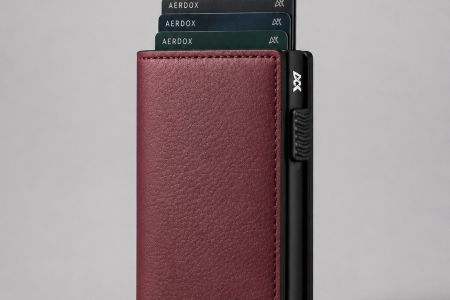
RFID blocking is designed to reduce radio communication between a compatible contactless card and a nearby reader while the card is inside a shielded wallet section. It can be a useful physical layer, but it does not stop online fraud, phishing, card theft, account takeover or transactions made after a card is removed.
What RFID means in a wallet
RFID stands for radio-frequency identification. Contactless cards can exchange limited information with a compatible reader over a short distance. A shielding layer, often metal or a conductive material, is intended to disrupt that communication while the card remains enclosed.
Wallet marketing sometimes turns this narrow function into a broad security promise. That is misleading. The feature concerns radio communication at the physical card. It cannot protect credentials entered into a fake website, prevent a merchant data breach, secure a weak email password or stop someone using a stolen card outside the wallet.
What RFID blocking can and cannot address
| Situation | Can wallet shielding help? | Better response |
|---|---|---|
| Compatible card stored inside shielded chamber near a reader | Designed to reduce communication | Keep the card fully inside the protected area |
| Card in an unshielded exterior sleeve | Not necessarily | Check the exact compartment design |
| Phishing message asking for card details | No | Do not follow the link; contact the institution directly |
| Lost or stolen physical card | No once removed | Lock or report the card promptly |
| Compromised online account | No | Use strong unique passwords and multi-factor authentication |
Which part of a wallet is protected?
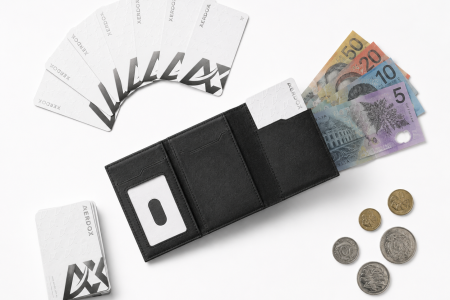
This is the most important product question. A wallet may have a metal card chamber plus an exterior sleeve. The chamber may be shielded while the sleeve remains designed for fast tap-and-go access. That is a useful arrangement only when the owner understands where each card sits.
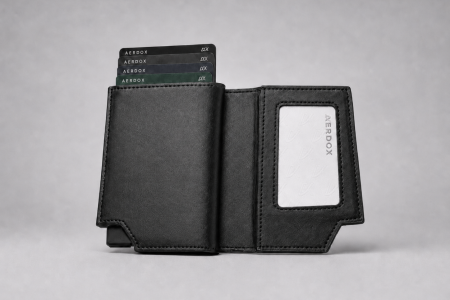
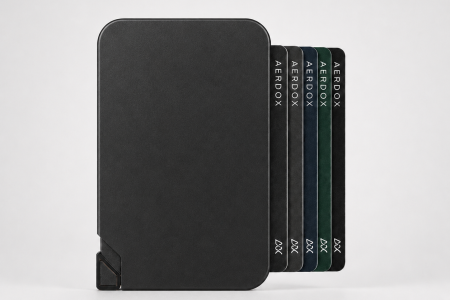
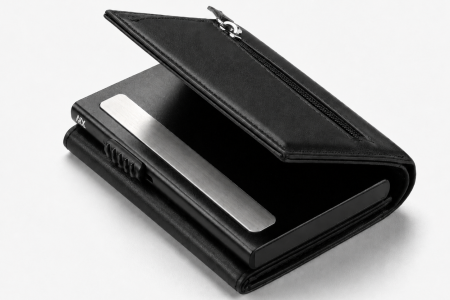
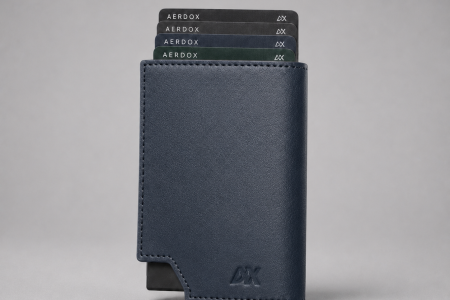
The Aerdox Astra Bi-Fold Cardholder is described as having an integrated RFID-blocking aluminium core. Its side-slider presents cards from that chamber in a tiered stack. Keep cards that you want shielded inside the chamber and follow the live product instructions.
Do not assume every Aerdox product or every pocket has the same feature. Product pages should be checked individually. Our existing article on RFID-blocking wallets in Australia provides additional local buyer context.
Does Australia require an RFID-blocking wallet?
There is no universal requirement to use one. The decision is personal and should reflect how you carry contactless cards, the product’s construction and the value you place on this physical layer. Banks and payment networks already use transaction controls and consumer protections, but customers still need to monitor accounts and report suspicious activity.
For current advice about card fraud, lost cards and disputed transactions, use information from your bank and official Australian sources. A wallet guide cannot replace institution-specific instructions or financial advice.
RFID blocking is not the same as card retention
A card must also stay physically secure. Look at how a wallet holds cards when turned upside down, how the mechanism behaves at the recommended load and whether exterior sleeves have appropriate retention. Shielding without good retention does not prevent loss.
A rigid aluminium chamber can provide both structure and a conductive barrier, but it must be used correctly. Do not place coins, keys or unusually thick access fobs into a card ejector. Overfilling can affect access and place pressure on cards even if the shielding material itself remains present.
How to test everyday use without risky experiments
Do not rely on unauthorised scanning apps or improvised tests that may expose card information. Instead, read the product specification, confirm the protected area and use a normal payment terminal only as intended. If a card is meant to remain usable without removal, it may be in an exterior unshielded location; if it must be removed for use, it may be inside the shielded core.
If you are uncertain, ask the seller which compartment is RFID blocking and what types of cards the mechanism supports. Avoid products that make absolute claims without explaining the construction.
A complete card-security routine
- Keep compatible cards in the protected chamber when not in use.
- Turn on transaction notifications offered by your bank.
- Use unique passwords and multi-factor authentication for banking and email.
- Never keep PINs or account recovery information in the wallet.
- Review statements and report unfamiliar activity promptly.
- Lock or report a lost card using the bank’s official channel.
- Keep your phone and operating system updated if you use digital wallets.
How to compare RFID wallets honestly
- Which exact compartment is shielded?
- Does the product explain the shielding material or construction?
- Can your normal card stack fit without forcing it?
- Are frequently used cards easy to remove and replace?
- Does the wallet make realistic claims rather than promising total protection?
- Are current product instructions, returns and contact details clear?
Security features should reduce friction and uncertainty. If a wallet makes the owner unsure where cards belong or encourages a false sense of safety, it has not solved the full everyday problem. Pair an appropriate protected chamber with ordinary digital and physical security habits.
Keep the protected section clean and within its stated capacity; the Aerdox wallet care guide explains routine inspection without risky home modifications.
Australian payments context
The Reserve Bank of Australia reports that cards remain Australia’s most-used consumer payment method, while its 2026 payments-system review says card-not-present fraud accounts for most fraud value. RFID-blocking material addresses only a limited physical-reading scenario; it cannot prevent online fraud, phishing or misuse of a lost card. Read the RBA consumer payments research.
Editorial note: Product specifications, availability and compatibility can change. Confirm the current details on the linked Aerdox product page before purchase.
Frequently asked questions
Does RFID blocking stop tap-and-go payments?
It is designed to reduce contactless communication while a compatible card is fully inside the protected section. Remove the card and use it normally when you choose to pay.
Do all bank cards use RFID?
No. Card technology varies. Check the card issuer’s information and the contactless symbol rather than assuming every card behaves the same way.
Can an RFID wallet stop online fraud?
No. It does not protect credentials entered online or accounts compromised through phishing, malware or weak passwords.
Are exterior card slots RFID blocking?
Not necessarily. Protection depends on the construction around that specific slot. Verify the product documentation.
Is an aluminium wallet automatically RFID blocking?
Metal can provide shielding, but performance depends on coverage and construction. Use the manufacturer’s specific claim and instructions rather than the material alone.
 by
by