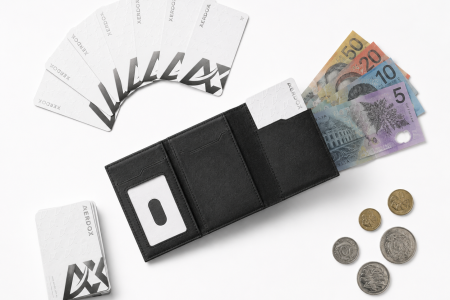
A slim wallet should make everyday carry easier, not force you into a format that does not suit your day. The best choice depends on five things: the cards you genuinely use, whether you carry notes or coins, where you keep the wallet, how quickly you need a card, and whether you want extras such as RFID-blocking construction or phone attachment.
Start with what you carry, not the wallet style
Marketing photos often show an unrealistically perfect loadout. A better buying process begins with your current wallet. Empty it onto a table and sort everything into four groups: used most days, used occasionally, available digitally, and no longer needed. Keep the first group. Question the second. Move the third to a secure digital option where appropriate, and discard expired cards and old receipts safely.
This simple audit matters because a wallet can only stay slim when its contents are controlled. Buying a thinner shell and filling it with the same collection of loyalty cards, folded receipts and loose change usually recreates the original bulk within a week. If you routinely need a work pass, driver licence, two payment cards, Medicare card and a backup card, choose a design that handles that real load rather than an aspirational three-card setup.
Which slim-wallet format fits your day?
| Format | Best for | Trade-off to consider |
|---|---|---|
| Cardholder | Essential cards, front-pocket carry and tap-and-go routines | Limited room for notes, coins and paper items |
| Compact bi-fold cardholder | Card-focused carry with a familiar folding cover | Slightly thicker than a flat cardholder |
| Full bi-fold | Work ID, licence, cards and occasional notes | More structure and pocket space than a minimal sleeve |
| Tri-fold | People who need cards, cash, ID and organised sections | Not the smallest option, especially when overfilled |
| MagSafe-style wallet | Phone-first carry for errands, weekends and events | Suited to a small card set rather than a full wallet loadout |
The right format is the smallest one that still handles your normal week. If you regularly carry cash or must show an ID card without removing it, a full wallet can be more practical than a compact sleeve. If you mostly pay by phone and card, a cardholder or phone-attached wallet may remove unnecessary bulk.
Check card access, not just card capacity
Capacity tells you how much a wallet may carry; access tells you how it behaves at a checkout, tram gate or building entrance. Look at how your most-used card comes out. Does the wallet provide an exterior sleeve, a thumb window, a tiered card mechanism or a dedicated ID window? A design that makes one common action easier can be more valuable than one that simply holds more.
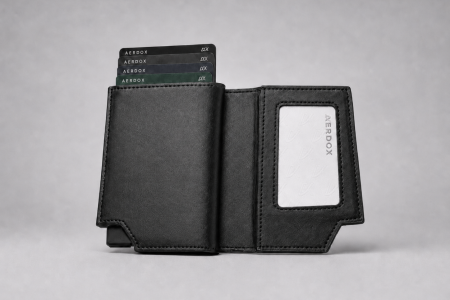
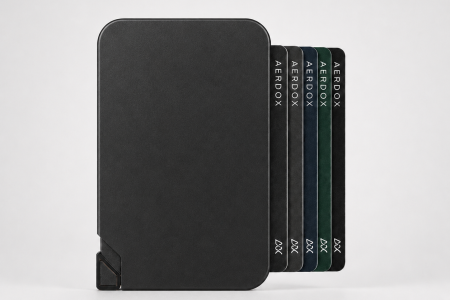
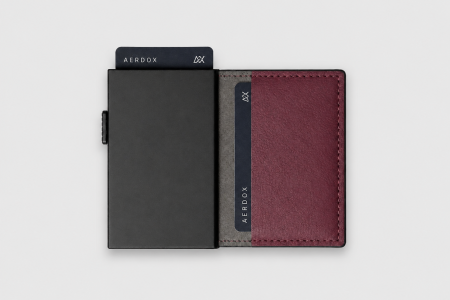
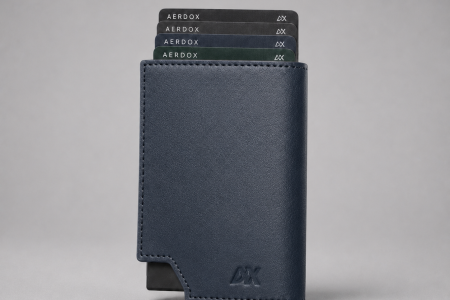
Aerdox uses different access patterns across the range. The Aerdox Glide Cardholder combines a tiered ejector with an exterior sleeve and thumb-slide window. The Aerdox Astra Bi-Fold Cardholder adds a compact folding wrap around a quick-access aluminium card chamber. The Aerdox Vector Bi-fold Wallet keeps a more traditional bi-fold form and includes a transparent interior ID slot.
Think about pocket comfort
A wallet can be slim on paper and still feel awkward. Hard corners, uneven stacking and a thick bundle of folded notes can create pressure points. Front-pocket carry generally rewards a shorter, controlled card stack and a smooth outer profile. Back-pocket carry can feel familiar, but sitting on a thick wallet may be uncomfortable and can encourage you to carry more than necessary.
Before buying, compare the closed shape and the way contents are distributed. A rigid card chamber keeps cards aligned, while a folding design spreads other items into separate areas. Neither is universally better. The important question is whether the structure matches the pocket, bag or jacket in which you will use it. Our guide for Melbourne commuters explores this in a daily travel context.
Understand RFID blocking without the hype
RFID-blocking construction is intended to reduce unwanted contactless communication with compatible cards while they are stored inside the protected section. It is not a complete identity-theft solution and does not protect card numbers shared online, weak passwords, phishing or a lost card used physically. Treat it as one physical layer in a broader security routine.
If this feature matters to you, verify which compartment is protected and which cards remain outside it. The aluminium chamber in the Astra is described as an RFID-blocking core. Cards kept in an exterior quick-access sleeve may not receive the same shielding, so place cards according to the product instructions and your priorities. Read our detailed Australian RFID wallet guide for the limits and practical use of the feature.
Choose materials by use and care
Material descriptions can sound impressive while revealing little about daily use. Look instead at the construction: edge finishing, stitching, attachment points, the card-retention system and how the surface should be cleaned. A leather or leather-style wrap provides a familiar tactile feel; an aluminium chamber adds structure and supports a mechanical card mechanism. Mixed-material designs can combine both characteristics.
Whatever you choose, avoid overfilling, keep the wallet away from prolonged moisture and heat, and remove grit before wiping the surface. Follow the instructions supplied for the specific finish. A slim wallet that is used within its intended capacity will usually keep its shape better than one under constant strain.
Match an Aerdox wallet to your carry style
- Choose Glide when you want the leanest card-focused option, quick mechanical access and an exterior sleeve for a frequently used card.
- Choose Astra when you want a compact folding feel, a tiered pop-up card chamber and an RFID-blocking core.
- Choose Vector when you prefer a professional bi-fold with quick-access cards and a transparent ID window.
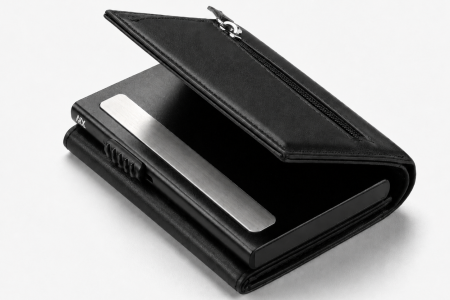
- Choose Voyager when you need three-panel organisation for cards, notes, ID and fuller everyday carry. See the Aerdox Voyager Tri-fold Wallet.
- Choose AeroSnap when you want a phone-first option for a few essential cards on light-carry days. See Aerdox AeroSnap and check compatibility before purchase.
A five-minute buying checklist
- Count the cards you used in the past seven days.
- Decide whether physical cash, coins, receipts or an ID window are required.
- Choose the pocket or bag where the wallet will normally live.
- Identify your fastest-access item: payment card, transit pass, work badge or licence.
- Verify the current product page for capacity, compatibility, finish and care details.
A good slim wallet is not the one with the fewest millimetres in a specification table. It is the one that removes friction from your routine while carrying only what you need. Begin with the loadout, choose the appropriate structure, and maintain the habit with a weekly receipt and card reset.
Editorial note: Product specifications, availability and compatibility can change. Confirm the current details on the linked Aerdox product page before purchase.
Frequently asked questions
How many cards should I keep in a slim wallet?
Keep the cards you use during a normal week, plus one sensible backup. The exact number is personal and must remain within the wallet maker’s stated capacity.
Is a cardholder better than a bi-fold?
A cardholder is better for minimal card-only carry. A bi-fold is often better when you need notes, an ID window or separate sections. Choose for function rather than the label.
Can a slim wallet carry cash?
Some can, but the method varies. Check whether the product has a note section or expects folded notes. Regular cash and coins usually suit a fuller bi-fold or tri-fold better than a minimal cardholder.
Does RFID blocking protect every card?
Only compatible cards stored inside the protected part of the wallet may be shielded. Exterior sleeves may behave differently. RFID blocking also does not replace normal card and account security.
What is the best slim wallet for front-pocket carry?
Look for a controlled card stack, smooth edges and no unnecessary paper storage. The best choice depends on your pocket and real card count; a cardholder is usually the most compact starting point.
 by
by