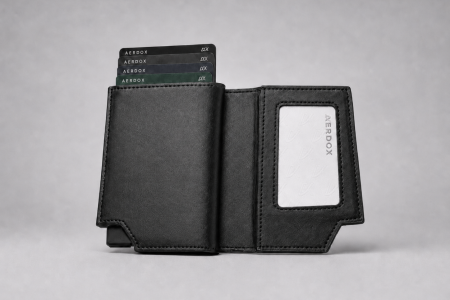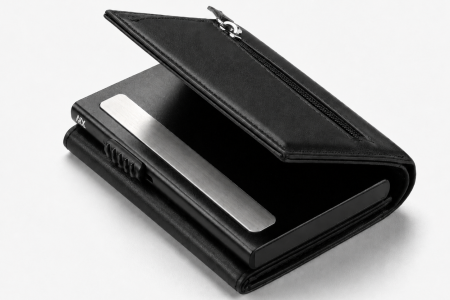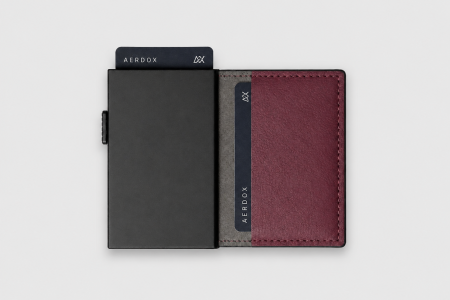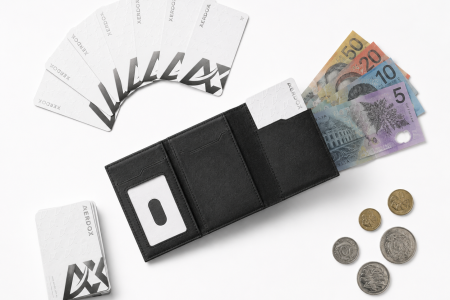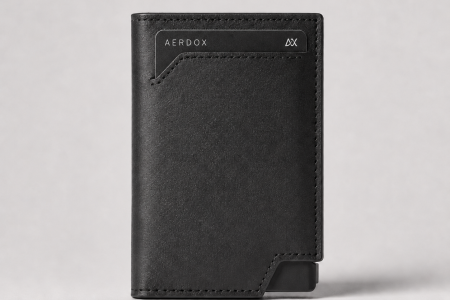
Choose wallet materials by how they are constructed and used, not by one impressive label. A leather or leather-style wrap can provide grip and a familiar finish; an aluminium chamber adds structure and supports mechanical card access. Stitching, edges, attachment points and care guidance often matter as much as the main material.
Read material claims carefully
Terms such as premium, genuine, top-grain, vegan, carbon fibre and leather-style are not interchangeable. A product page should state what the component is rather than relying on atmosphere. If the composition is unclear, ask the seller before using a cleaner, conditioner or waterproofing product.
Aerdox’s live pages describe several products as using leather-style outer sections with aluminium quick-access card chambers. The supplied product document uses leather language for some models. Because finishes and specifications may change, the current product page and care instructions should take priority over older documents or assumptions.
What each construction element contributes
| Element | Possible benefit | Care point |
|---|---|---|
| Leather or leather-style wrap | Tactile grip, familiar appearance, folding cover | Avoid unapproved cleaners and prolonged moisture |
| Aluminium chamber | Rigid card alignment and mechanical access | Keep grit, coins and bent cards out of the mechanism |
| Stitching | Joins panels and defines edges | Do not pull loose threads; seek repair advice |
| Transparent ID window | Displays a credential without removal | Avoid sharp edges and harsh solvents |
| Carabiner and ring | Attaches a key accessory to a closed loop | Inspect the gate and attachment point for wear |
Rigid versus flexible wallets
A rigid card chamber keeps a consistent silhouette and can present cards through a trigger. It also has a defined capacity and intended card type. Do not force thick fobs, coins or warped cards into it. A flexible sleeve adapts to contents, but repeated overfilling can stretch it and reduce retention.
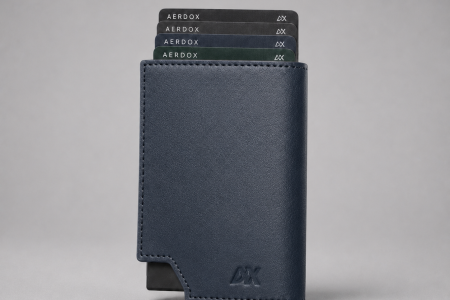
Mixed construction tries to combine both characteristics. The Aerdox Glide Cardholder pairs a matte-black aluminium card ejector with an attached leather-style sleeve and thumb window. The Aerdox Astra places a folding wrap around a rigid card core. Choose based on the access pattern and load, not simply which material sounds more luxurious.
Look at edges and joins
The edge is where the wallet meets a pocket hundreds of times. Check whether it is smooth, painted, folded or stitched, and whether hardware sits proud of the surface. Uneven or sharp areas can become pressure points. Around a thumb window or ID slot, the opening should be clean and sized for the intended action.
Stitching should look consistent and sit away from moving mechanisms. A loose thread is not an invitation to pull; pulling can open the seam. Contact the seller for appropriate repair or warranty guidance.
Material and RFID blocking are separate questions
Metal can help create a shield around compatible contactless cards, but protection depends on coverage and design. The Astra’s aluminium chamber is explicitly described as an RFID-blocking core. Do not assume every aluminium component or exterior sleeve provides the same effect.
Read our Australian RFID wallet guide for the limits. Shielding does not replace digital account security or prompt reporting of a lost card.
Match the material to the environment
- Daily commuting: prioritise a controlled profile, easy-clean surface and reliable access.
- Outdoor work: consider exposure to dust, moisture and abrasion, and follow care limits.
- Office use: an ID window or refined folding finish may be more useful than maximum ruggedness.
- Travel: choose organisation and inspect all attachment points before departure.
- Phone attachment: verify compatibility and keep the contact surface free from grit.
Basic care without guesswork
- Empty the wallet and remove loose grit with a soft dry method approved for the finish.
- Spot test any permitted cleaner in an inconspicuous area.
- Use minimal moisture and never soak the wallet or mechanism.
- Let it dry naturally away from heaters and direct prolonged sun.
- Reload only the intended cards and items.
Do not apply leather conditioner to a leather-style or coated surface unless the maker confirms it. Do not lubricate a card mechanism with household oil. Follow the product-specific guidance or ask Aerdox before treatment.
How Aerdox formats use materials differently
The Aerdox Vector uses a folding outer jacket, aluminium card-ejector core and transparent ID slot for professional carry. The Voyager adds a textured tri-fold structure around its slide-out core. The AirTag Keyring uses a leather-style full-enclosure sleeve and spring-loaded carabiner. Each material choice supports a different action.
That is the useful buying question: what does the construction allow you to do more reliably?
Evaluate sustainability claims separately
Durability, repairability, recycled content and responsible sourcing are different claims. A product lasting longer can reduce replacement frequency, but that alone does not prove a complete environmental benefit. Look for specific, verifiable statements about materials and production rather than broad words such as eco-friendly. If Aerdox does not publish a claim for a product, this guide should not invent one.
Inspect a product when it arrives
Before loading personal cards, check the colour and finish against the order, inspect edges and stitching, and operate any empty mechanism only as instructed. Confirm the clip gate or fold closes normally. If something appears damaged, photograph the product without personal information and contact Aerdox before continued use. Early inspection makes a returns or support conversation clearer.
Editorial note: Product specifications, availability and compatibility can change. Confirm the current details on the linked Aerdox product page before purchase.
Frequently asked questions
Is aluminium better than leather for a wallet?
They serve different roles. Aluminium provides rigid card structure; leather or leather-style material provides a flexible, tactile outer layer. Mixed designs combine them.
How can I tell what my wallet is made from?
Use the current product description and care guide. If wording is unclear, ask the seller before applying treatments.
Can I use leather conditioner on every Aerdox wallet?
No. Use conditioner only if the specific material-care guidance approves it.
Will an aluminium chamber scratch cards?
Use clean, undamaged standard cards within the intended capacity. Grit, bent cards and foreign objects are more likely to cause problems.
What part usually wears first?
Wear depends on use, but edges, high-contact surfaces, sleeves and moving attachment points deserve regular inspection.
 by
by