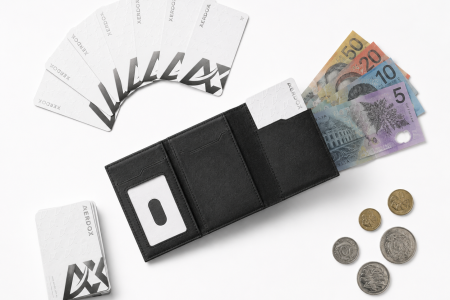
Wallet dimensions usually describe the empty product when closed, but pocket comfort depends on the loaded product. Compare height and width with a wallet that already fits, then consider thickness with your real cards, the distribution of notes or receipts, and the way the wallet opens. Capacity and access can matter more than a single millimetre measurement.
The three core wallet measurements
| Measurement | What it tells you | What it misses |
|---|---|---|
| Height | How tall the wallet is when closed | Whether it catches on a pocket opening |
| Width | The longest closed face dimension | How it rotates or sits in a curved pocket |
| Thickness or depth | The empty closed profile, if specified | Growth caused by cards, cash and paper |
Always confirm whether measurements are closed or open and whether they apply to an empty product. A bi-fold or tri-fold may have a large open width that matters on a counter but not inside a pocket. A rigid cardholder may change little when loaded, while a soft wallet can expand in uneven ways.
Why loaded thickness is the number you feel
Each card adds a small, predictable layer. Embossed cards can add more. Notes folded several times create concentrated thickness, while receipts form soft, irregular wedges. Coins are harder again because they create isolated pressure points. Two wallets with the same empty depth can feel completely different after a week of use.
Manufacturers may test capacity with standard flat cards. Your stack may include access credentials, laminated membership cards or damaged cards with lifting edges. Use only items the product is designed to hold, and never force a thick object into an aluminium card chamber or tight sleeve.
Capacity describes function, not comfort
A larger capacity can be useful when you need it. It can also encourage clutter. The more important questions are: does the wallet keep primary cards easy to reach, is there an appropriate place for notes or ID, and does the loaded shape remain comfortable in your intended pocket?
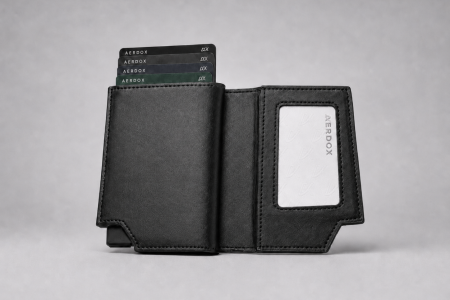
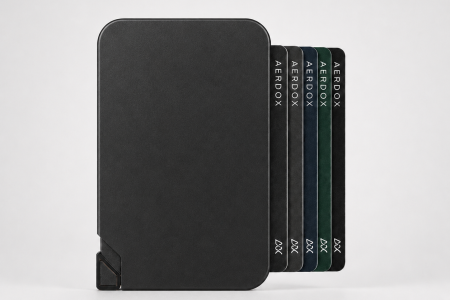
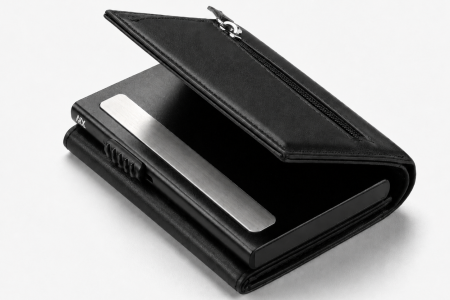
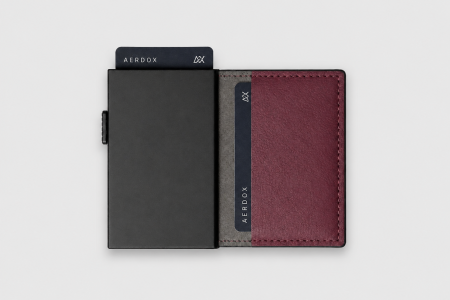
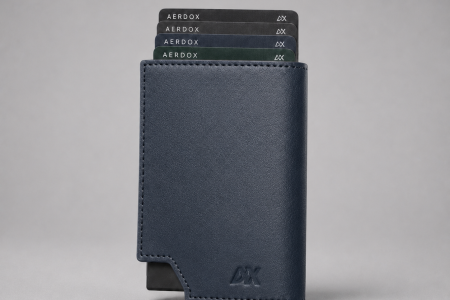
For a card-focused routine, the Aerdox Glide Cardholder concentrates storage around a tiered card ejector and exterior sleeve. The Aerdox Astra Bi-Fold Cardholder adds a folding wrap around an aluminium card core. The Aerdox Vector Bi-fold Wallet and Aerdox Voyager Tri-fold Wallet use broader structures for ID and fuller organisation.
Because product specifications can change, check the current page for exact dimensions and supported capacity before buying. This guide deliberately does not repeat unverified figures.
Shape can matter more than area
A rectangular measurement does not describe corner radius, hardware placement or how the wallet’s thickness is distributed. A narrow but long wallet may sit awkwardly across a small pocket. A shorter rigid cardholder can feel more noticeable at one edge. A folding wallet may spread pressure across a wider surface.
Look at straight-on, side and open product images. Identify triggers, clasps, carabiners and raised seams. Consider which face will rest against your body. For front-pocket use, our slim wallet guide for Melbourne commuters provides additional daily-carry context.
How to measure your current wallet
- Remove expired cards and old receipts so the test reflects a sensible normal load.
- Close the wallet naturally without squeezing it.
- Measure the longest face, the shorter face and the thickest loaded point.
- Record the number and type of cards, notes and other contents.
- Note the pocket and clothing in which it feels comfortable.
- Use these figures as a personal reference, not an absolute product ranking.
If your current wallet is uncomfortable, record that too. Measure where it catches and identify whether the problem is size, a hard corner or uneven contents. A new wallet should solve the specific issue, not merely have a smaller headline number.
Compare cardholders, bi-folds and tri-folds fairly
Cardholders
Compare the card chamber, exterior sleeve and access method. A rigid chamber may keep its shape, while a soft sleeve can expand. Cardholders usually suit front-pocket carry and a controlled card set.
Compact bi-fold cardholders
Allow for the folding wrap as well as the card core. They provide a familiar opening action and a more wallet-like appearance, but are naturally broader or thicker than a flat cardholder.
Full bi-fold wallets
Check whether the design adds useful storage such as a note area or ID window. Judge the wallet with those sections in normal use, not packed to every edge.
Tri-fold wallets
Three panels support organisation but create multiple folded layers. Choose this format when the sections earn their space. The comparison in our bi-fold vs tri-fold guide can help.
Dimensions for travel and work
Travel changes the loadout. You may add a backup payment card, local transit card or receipts that must be kept temporarily. Work may require an access pass or displayed ID. Do not buy a daily wallet for an occasional maximum load if a separate travel organiser would be safer and more comfortable. Equally, do not choose a minimal cardholder if every workday requires items it cannot store appropriately.
For air travel, keep passports and travel documents in a dedicated secure place rather than assuming a standard wallet is designed for them. Follow airline, government and payment-provider guidance for required documents and backups.
A better product comparison checklist
- Are dimensions stated for the wallet closed and empty?
- What types of cards or items is each compartment designed to hold?
- How does thickness change at your real load?
- Where are the hardest edges and pieces of hardware?
- Can the primary card be reached without unpacking other items?
- Does the design have appropriate storage for notes, ID or receipts?
- Will it fit the pocket and clothing used most often?
Measurements are valuable when they answer a real question. They cannot tell you whether a wallet is organised, easy to use or comfortable with your contents. Combine the numbers with an honest loadout and the product’s storage design.
Editorial note: Product specifications, availability and compatibility can change. Confirm the current details on the linked Aerdox product page before purchase.
Frequently asked questions
What is the standard size of a wallet?
There is no single standard. Cardholders, bi-folds, tri-folds and phone wallets use different shapes. Compare specific closed measurements and intended contents.
How thick should a slim wallet be?
Thin enough to remain comfortable with your real cards. An empty thickness figure is less useful than the loaded profile at the recommended capacity.
Do more card slots always mean a bigger wallet?
Not always, because designs stack and distribute cards differently. More stored items will still add weight and usually increase the loaded profile.
Should I measure my pocket?
It can help, but also test the opening angle and how the pocket changes when seated. A wallet may fit the flat dimensions and still be awkward to remove.
Why does my wallet get thicker over time?
Receipts, extra cards and folded notes accumulate, while some materials relax around the contents. A weekly clean-out prevents most capacity creep.
 by
by