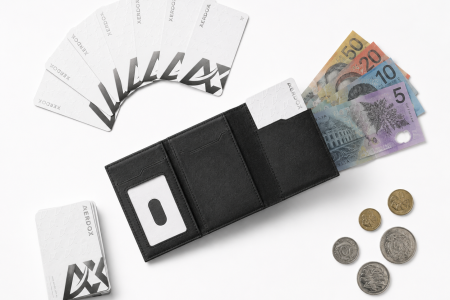
The difference between a card holder and a wallet is mainly about storage and structure. A card holder prioritises a small card set and fast access. A wallet provides more room for notes, ID, receipts or separate sections. Neither is automatically better: the right choice is the smallest format that supports your normal week without overfilling.
Card holder vs wallet at a glance
| Question | Card holder | Wallet |
|---|---|---|
| Primary purpose | Carry a focused set of cards | Organise cards plus other items |
| Pocket profile | Usually smaller and easier in a front pocket | Varies from compact bi-fold to larger tri-fold |
| Cash | Often limited or requires folded notes | More likely to include a note section |
| Coins | Rarely suitable | Only suitable where a dedicated area is provided |
| ID display | May use an exterior sleeve | Can include a transparent interior window |
| Best habit | Regularly control the card count | Regularly remove receipts and unused cards |
Choose based on your seven-day carry
People often choose a new wallet by imagining special occasions. A more reliable method is to look at the last seven days. Which payment cards did you use? Did you show a driver licence or work badge? Did you need physical notes? Did you keep a receipt for reimbursement? Did you carry a transit pass that needs to be reached several times a day?
If the answer is mostly two or three cards and a phone, a card holder is likely enough. If you use a mixture of cards, notes, ID and paper, a wallet will prevent those items from floating around your pockets. The goal is not extreme minimalism. It is deliberate carry: every item has a reason and a suitable place.
When a card holder is the better choice
A card holder works best for routines built around contactless payments and a small number of essentials. Its compact shape can sit more comfortably in a front pocket and makes unnecessary items obvious. Because there is no deep compartment for paperwork, expired membership cards and month-old receipts are less likely to accumulate unnoticed.
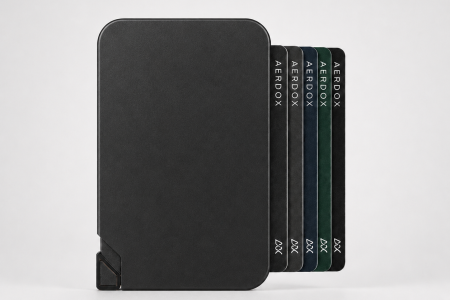
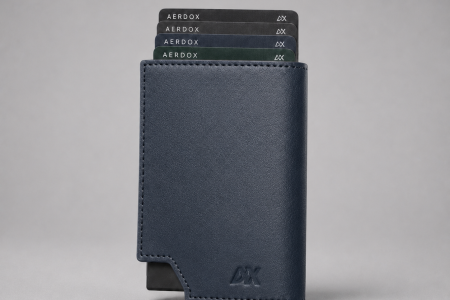
Access design matters. A plain sleeve is simple, while a mechanical card chamber can present several cards in a stepped stack. An exterior sleeve can keep one frequently used card separate. The Aerdox Glide Cardholder, for example, uses an aluminium ejector, an attached exterior sleeve and a thumb-slide window. That combination is intended for card-focused carry and quick use of a primary card or pass.
A card holder may be a poor fit if you frequently carry coins, unfolded notes, multiple access cards or paper records. Forcing these items into a minimal design can stretch pockets, make cards harder to reach and create exactly the bulk you were trying to avoid.
When a wallet is the better choice
A wallet earns its extra size when its sections solve real problems. A note area keeps cash separate from cards. An ID window allows a licence or work badge to be shown without removing it. Separate panels can organise primary cards, backups and travel items. A larger wallet can therefore feel more orderly than an overstuffed card holder.
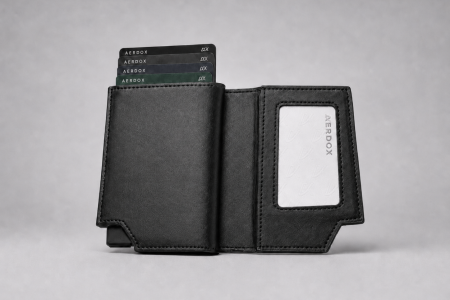
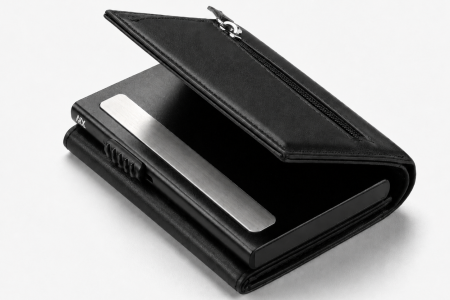
The Aerdox Vector Bi-fold Wallet combines a traditional folding jacket with an aluminium quick-access card core and transparent interior ID slot. It suits someone who wants a familiar professional wallet format but values faster card deployment. The Aerdox Voyager Tri-fold Wallet goes further with three-panel organisation, a slide-out card core and an ID sleeve for fuller carry.
The trade-off is discipline. Extra space can invite extra clutter. A wallet should still be emptied of receipts and rarely used cards regularly. Read how to organise your cards for a clutter-free wallet for a practical reset process.
The useful middle ground: a bi-fold cardholder
A compact bi-fold cardholder sits between a flat card holder and a full wallet. It keeps cards at the centre of the design but adds a folding outer layer. This can provide a more familiar feel, protect the card mechanism and create a refined appearance without introducing the storage of a full billfold.
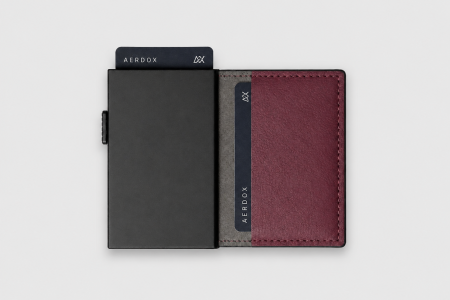
The Aerdox Astra Bi-Fold Cardholder uses this approach. Its side-slider fans cards from an aluminium chamber, while the folding wrap gives it a classic wallet character. The chamber is described as an RFID-blocking core. It is a logical option for someone who finds a flat card holder too minimal but does not require the full organisation of Vector or Voyager.
Compare comfort and access
Capacity is only part of usability. Consider where the item will live and how often you touch it. A front-pocket card holder should have a controlled shape and easy card selection. A jacket-pocket wallet can use a broader format. A work wallet may need an ID visible several times a day. A travel wallet may prioritise separation and backup payment over minimum size.
Run a simple test with your current carry. Stack your essential cards, notes and ID. Remove everything else. If the stack is mostly cards, begin your search with a card holder. If the stack contains several different item types, begin with a wallet. Our bi-fold vs tri-fold guide can help with the next decision.
What about phone wallets?
A phone-attached wallet is a separate category rather than a direct replacement for every card holder or wallet. It keeps a few essential cards near the device you already carry, which can work well for short errands, weekends and events. It may be less appropriate for people who need cash, many cards or separation between phone and payment backup.
The Aerdox AeroSnap is the phone-first option in the range. Check your phone and case compatibility on the current product page before purchase, and decide whether keeping all essentials together matches your risk preferences.
A practical decision checklist
- Count essentials: include only what you used in a normal week.
- Identify non-card items: notes, coins, receipts and keys need an appropriate place.
- Choose the carry location: front pocket, jacket, work bag or travel pouch.
- Rank access: decide which card or ID must be reached fastest.
- Allow a sensible backup: minimal carry should still support your routine if one payment method fails.
- Verify product details: confirm current capacity, finishes and compatibility on the product page.
Choose the format that removes the most daily friction. A card holder is not a compromise when cards are all you need, and a wallet is not unnecessary bulk when its organisation is used. The wrong option is the one that makes you fight the design every day.
Editorial note: Product specifications, availability and compatibility can change. Confirm the current details on the linked Aerdox product page before purchase.
Frequently asked questions
Is a card holder safer than a wallet?
Safety depends more on how you store and manage it than the format. Some designs include an RFID-blocking card chamber, but no wallet prevents every form of theft, loss or fraud.
Can I put cash in a card holder?
Some card holders provide a place for folded notes, while others do not. Check the product design and do not force cash into the card mechanism.
Will a card holder damage cards?
A well-designed holder used within its stated capacity should keep cards aligned. Damage is more likely when cards are bent, exposed to grit or forced into an overfilled compartment.
Who should choose a bi-fold wallet?
A bi-fold suits someone who wants cards, notes or ID in a familiar folding format without the multiple panels of a tri-fold.
Can a card holder replace my wallet?
Yes, if your real carry is card-focused. Test it by living with only essentials for a week before changing formats.
 by
by