A reliable travel carry separates primary payment from backup, keeps required ID secure, limits everyday cards and gives keys or luggage a dependable attachment. The exact documents depend on the destination, so use current government, airline, bank and health guidance rather than a generic packing list alone.
Build primary and backup layers
| Layer | Typical contents | Storage principle |
|---|---|---|
| Primary | Daily payment, local transit, required ID | Accessible but controlled |
| Backup | Second payment method and emergency contact | Physically separate from primary wallet |
| Documents | Passport, visa or itinerary where required | Dedicated secure organiser, not a standard wallet by default |
| Keys and luggage | Home keys, bag locks, optional tracker | Strong closed rings and inspected loops |
Separation matters because a single lost bag or pickpocketing event should not remove every payment option. Do not split items in a way that makes them easy to forget; use consistent, documented locations known only to the traveller or trusted companion.
Choose the primary wallet
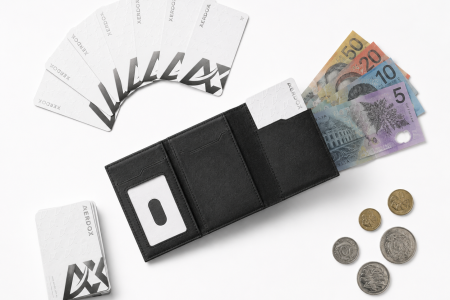
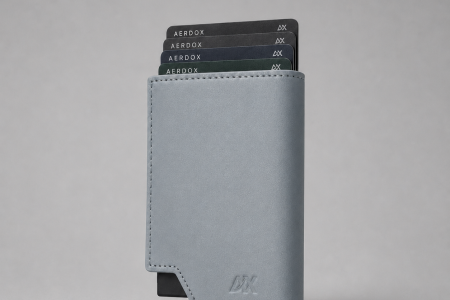
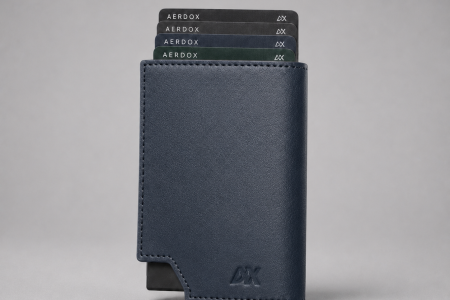
For fuller travel organisation, the Aerdox Voyager Tri-fold Wallet provides three panels, a slide-out aluminium card core and a transparent ID sleeve. It suits cards, notes and ID when a cardholder is too limited. It is not a passport holder unless the live product page explicitly confirms compatible dimensions.
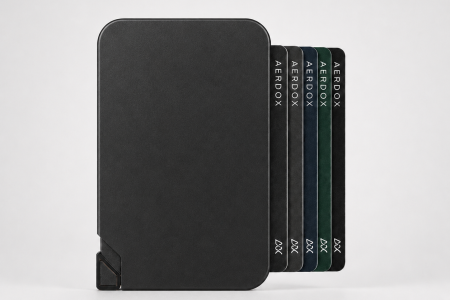
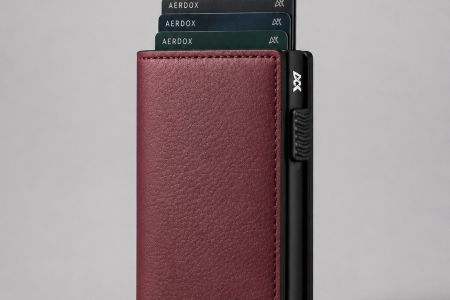
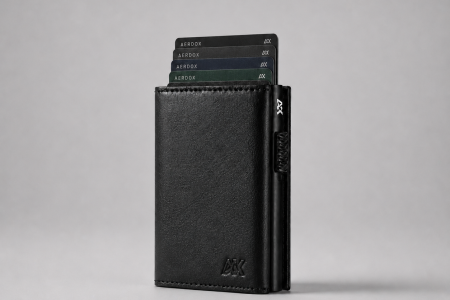
For lighter domestic trips, the Aerdox Vector offers a bi-fold format, quick-access cards and an ID window. Minimal travellers may prefer Glide or Astra, provided cash and document needs are addressed elsewhere.
Plan payment before departure
- Tell banks about travel if their current guidance requests it.
- Check expiry dates and international acceptance.
- Know official card-lock and support channels.
- Keep one backup separate from the phone and primary wallet.
- Do not write PINs or banking recovery codes in the luggage.
- Carry a small amount of appropriate cash if the destination warrants it.
Fees, exchange rates and card protections change. Check the current terms from each financial institution and seek professional advice for significant financial decisions.
Handle identity documents carefully
Domestic and international journeys require different identification. Confirm accepted documents with the airline, transport provider and official destination guidance. Do not carry a passport merely because a wallet has space; carry it when required and store it in a suitable secure organiser.
Keep digital copies only using a secure method and where doing so is lawful and useful. A photo on an unlocked phone may create more risk without serving as accepted ID.
Use an AirTag responsibly
The Aerdox AirTag Keyring can attach an Apple AirTag to luggage or keys using a full-enclosure sleeve and spring-loaded carabiner. Check the battery, Find My status and sound before travel. AirTag is an Apple product and should be used under Apple’s privacy and safety guidance.
Attach it to a structural internal loop where practical. A tracker does not guarantee baggage recovery or replace airline claim procedures. Check the carrier’s current battery and tracker rules.
Keep phone and wallet risks separate
A phone wallet such as Aerdox AeroSnap can be convenient during an event or airport transfer, but losing the phone may also remove attached cards. For travel, keep a separate backup and verify phone, case and wallet compatibility before departure.
Pack for the destination, not every possibility
Remove local loyalty cards and work credentials that have no travel purpose. Add only destination-specific transit, accommodation or insurance items. At the end of the trip, return the daily wallet to its normal loadout so travel paper and foreign currency do not become permanent clutter.
Our travel wallet setup for Australians leaving Melbourne offers a more detailed departure routine.
Night-before checklist
- Confirm required documents using official sources.
- Check cards, expiry, cash and separated backup.
- Charge phone and power bank where permitted.
- Test tracker and inspect clips, rings and luggage loops.
- Remove unnecessary daily cards.
- Record official support contacts securely.
On-the-road routine
Return the wallet, documents and keys to the same secure locations after every use. Process receipts daily. Review account notifications over a trusted connection and contact the institution directly if something looks wrong. Do not discuss exact storage locations in public.
A good travel carry is deliberately boring: each item has one place, backups are separate and the traveller knows the recovery steps.
Arrival-day reset
After checking in, remove boarding passes and receipts that no longer need to travel in the wallet, confirm the backup remains separate and move destination transit into the fastest approved position. Do not unpack passports, cards and cash onto a public hotel surface. Use the room’s available security features according to the accommodation’s guidance and your own judgement.
Returning to Australia
Follow current Australian border and customs instructions. Remove foreign transit cards and currency from the everyday wallet after they are safely stored, exchanged or dealt with. Review bank transactions, turn off travel settings that are no longer required and return work or local access cards to the daily loadout.
Travelling with another person
Do not place every group card and document in one wallet. Agree on secure separation and emergency contact steps without exposing exact storage locations. Each traveller should understand how to contact banks, insurers and transport providers through official channels.
Australian Government travel guidance
Smartraveller recommends arranging more than one way to access money overseas, checking whether your cards will work and researching local cash needs. Use this article as an organisation guide and check official destination advice before departure. Read Smartraveller’s travel-smart advice.
Editorial note: Product specifications, availability and compatibility can change. Confirm the current details on the linked Aerdox product page before purchase.
Frequently asked questions
Should I carry all bank cards when travelling?
No. Carry suitable primary and backup options, ideally separated, and store unused cards securely.
Is a tri-fold good for travel?
It can be useful for cards, notes and ID organisation. Check pocket comfort and do not assume it fits a passport.
Can I put an AirTag in checked luggage?
Check current airline and Apple guidance. Secure attachment and tracker status are essential, and a tracker does not replace baggage procedures.
Where should I keep backup payment?
In a secure location physically separate from the primary wallet and phone, appropriate to the trip.
What ID do Australians need to travel?
Requirements depend on domestic or international travel, carrier and destination. Verify with official government and transport sources.
 by
by