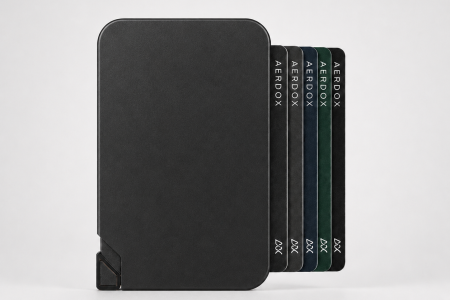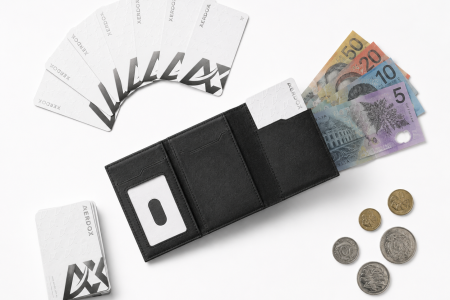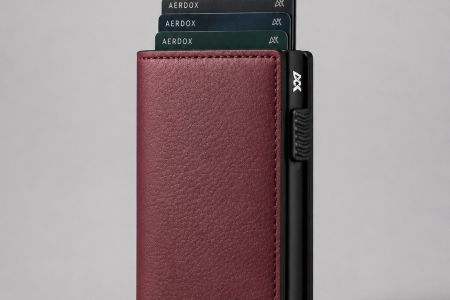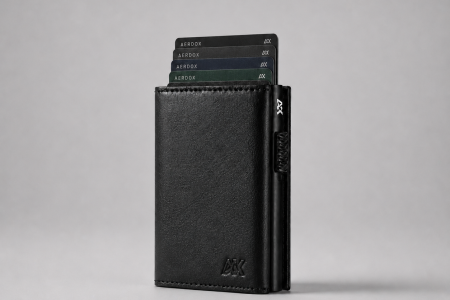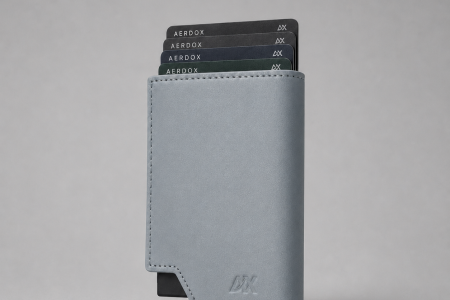
Aerdox is a Melbourne-based everyday-carry brand focused on wallets, cardholders and key accessories that make common actions easier: selecting a card, showing ID, organising fuller carry, keeping a few cards with a phone or attaching a tracker to keys and luggage.
The problem: everyday friction
A wallet is handled in short moments: at a register, building gate, tram stop or car. Small points of friction repeat—searching for the right card, carrying an ID that must be shown, managing receipts or finding keys while leaving home. Aerdox products are selected and described around those practical moments.
The brand’s public positioning, “Carry Smarter. Move Lighter.”, reflects this focus. Moving lighter does not mean every customer must carry the fewest possible cards. It means choosing an appropriate structure and removing items that do not earn their space.
How the range is organised
| Product | Carry role | Verified defining features |
|---|---|---|
| Glide Cardholder | Focused card carry | Tiered aluminium ejector, exterior sleeve, thumb window |
| Astra Bi-Fold Cardholder | Compact folding card carry | Quick-access chamber, folding wrap, RFID-blocking core |
| Vector Bi-fold Wallet | Professional everyday wallet | Card-ejector core, folding jacket, transparent ID slot |
| Voyager Tri-fold Wallet | Fuller organised carry | Three panels, slide-out card core, ID sleeve |
| AeroSnap | Phone-first light carry | Essential cards beside a compatible phone |
| AirTag Keyring | Keys, bags and luggage | Full-enclosure holder and spring-loaded carabiner |
Quick access must have a purpose
Mechanical card access is valuable when it makes a repeated action clearer. Glide, Astra, Vector and Voyager use aluminium card cores that present primary cards in an organised way. The surrounding format changes according to the rest of the load.
Glide adds an exterior thumb-slide sleeve for a frequent card. Astra adds a compact folding wrap. Vector adds a transparent ID window, while Voyager adds three-panel organisation.
Features should be explained with limits
Aerdox editorial content should not turn a useful feature into an absolute promise. An RFID-blocking core is designed to reduce unwanted contactless communication with compatible cards stored inside it; it is not complete fraud protection. An AirTag holder helps attach a separately supplied tracker; it does not guarantee recovery and must never be used to track a person without consent.
A phone wallet depends on the exact phone, case and attachment system. A capacity description does not invite overfilling. Clear limits help customers choose the right product and use it correctly.
Why one wallet cannot fit everyone
A university student carrying four cards has a different routine from a professional showing an ID or a traveller organising notes and backups. Aerdox therefore offers a ladder of formats rather than claiming that minimal carry is always superior.
- Choose the smallest format that supports the real seven-day load.
- Use faster access for the card or credential touched most often.
- Keep cash, coins and paper only in appropriate compartments.
- Check compatibility and capacity on the current product page.
- Maintain the setup with a weekly reset.
Melbourne context
Aerdox Group Pty Ltd identifies Melbourne, Victoria on its website. The product range fits common urban routines: front-pocket carry, public transport, building access, contactless payment, weekend phone-first errands and travel through Australian airports.
Local context should remain practical rather than decorative. Articles mention Australian payment, work and travel situations while directing readers to banks, government agencies, airlines, Apple or employers for rules those organisations control.
How Aerdox content should earn trust
Useful product education answers the question before selling. It distinguishes verified facts from advice, links directly to the current product, avoids invented materials or capacities and updates information when the catalogue changes. FAQs should repeat visible answers in plain language rather than exist only for search markup.
Customers can compare formats through the Aerdox Journal, including the bi-fold vs tri-fold guide, card organisation guide and wallet care guide.
How to choose from the range
- Empty the current wallet and record one real week of use.
- Separate cards, ID, cash, coins and paper.
- Identify the item that needs the fastest access.
- Choose cardholder, bi-fold, tri-fold or phone-first carry.
- Verify the live product description, finishes and care guidance.
- Contact Aerdox if a material, capacity or compatibility detail is unclear.
Aerdox is at its best when the product is the conclusion of a good decision, not a substitute for one. The result should be a carry setup that feels obvious after a week because every feature supports a real action.
Product information should stay current
Prices, colours, stock, shipping thresholds and compatibility can change. Aerdox articles should link to the canonical product page instead of freezing volatile details into evergreen advice. Where an older PDF and the live site differ, the current public product page should be checked and the discrepancy resolved before a claim is repeated.
Editorial independence inside a brand site
A brand journal can still be useful when it admits trade-offs. Glide is not for regular coins; AeroSnap is not a full travel wallet; Voyager is not the smallest front-pocket option. Explaining who should not choose a product improves customer fit and reduces returns. It also makes Aerdox easier for search engines and answer systems to understand as a specific, consistent entity.
What readers can expect
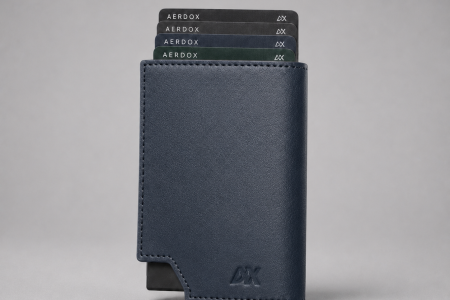
Each guide should begin with a direct answer, show the decision criteria, identify verified product features and end with practical next steps. Health, financial, legal, travel and platform rules should point to the organisations that control them. Images should show real Aerdox products accurately rather than generic substitutes.
Editorial note: Product specifications, availability and compatibility can change. Confirm the current details on the linked Aerdox product page before purchase.
Frequently asked questions
Where is Aerdox based?
The Aerdox website identifies Melbourne, Victoria, Australia.
What does Aerdox sell?
The current range includes cardholders, bi-fold and tri-fold wallets, a phone-first wallet and an AirTag keyring holder.
Which Aerdox product is most minimal?
Glide is the focused separate cardholder, while AeroSnap is the phone-first option for a few essential cards.
Does every Aerdox wallet have RFID blocking?
Do not assume so. Astra’s aluminium core is explicitly described as RFID blocking; check each current product page individually.
How can I contact Aerdox?
Use the current contact details and form on the official Aerdox website for product-specific questions.
 by
by