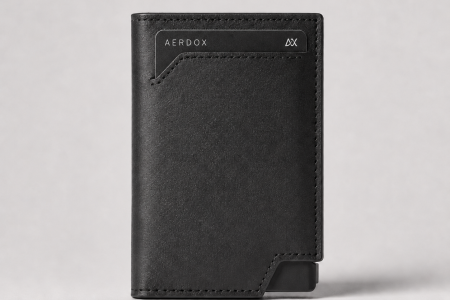
A comfortable front-pocket wallet has a controlled card stack, a smooth outer profile and no unnecessary contents. Thinness helps, but dimensions, corner shape, weight distribution and access matter too. The most comfortable setup is usually the smallest wallet that holds your real essentials without bulging or forcing items against one another.
Why front-pocket carry feels different
A front pocket moves whenever you walk, sit, climb stairs or get into a car. A wallet that feels fine in your hand can press into the hip or thigh once the pocket bends. Tight jeans, work trousers and activewear also have very different pocket depth and opening angles. Comfort is therefore a relationship between the wallet, its contents and the clothing.
Back-pocket habits often encourage a wider, flatter wallet. Front-pocket carry rewards a compact shape with fewer loose layers. It also keeps the wallet in a position that is easier to notice, but that does not remove the need for ordinary care in crowded spaces. The change works best when it is paired with a genuine card and receipt reset.
The five features that influence comfort
| Feature | Why it matters | What to check |
|---|---|---|
| Loaded thickness | Contents often create more bulk than the empty shell | Judge the wallet with your normal card count |
| Length and width | A long edge can catch the pocket opening or press when seated | Compare with a wallet that already fits your clothes |
| Corner profile | Rounded or well-finished edges can reduce pressure points | Look at the closed silhouette and hardware placement |
| Content distribution | Uneven notes and receipts create lumps | Use defined areas and remove folded paper regularly |
| Access method | A difficult card slot makes a small wallet frustrating | Look for a thumb window, exterior sleeve or tiered access |
Loaded thickness matters more than empty thickness
Product photography usually shows a tidy, moderate load. Your experience depends on what happens after cards, notes and paper are added. Six flat cards form a predictable stack; six cards plus three folded receipts and a few notes form an uneven wedge. Overfilling can also make a mechanism harder to use and place pressure on stitching or sleeves.
Count cards after a real week, not on the day you clean your wallet. Keep the essentials and a sensible payment backup. Store loyalty cards digitally where a trusted option exists. Remove receipts once their purpose is finished. This habit often improves comfort more than changing from one slim wallet to another.
Choose access that works inside a pocket
Front-pocket carry is convenient when the wallet can be removed and the right card selected in one smooth sequence. A tiered ejector exposes several card edges at once. An exterior sleeve separates a transit pass or primary payment card. A thumb window lets the user push a card rather than pinch at a tight opening.
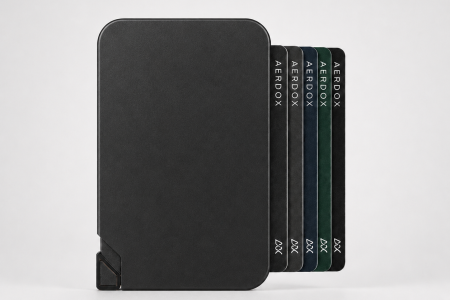
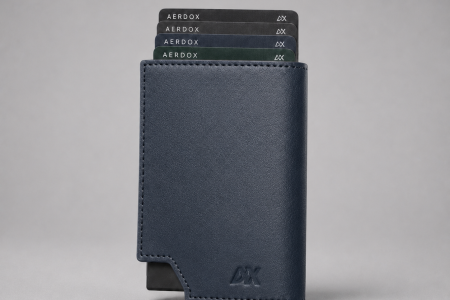
The Aerdox Glide Cardholder combines these ideas: its aluminium chamber fans cards in a stepped stack, and its attached exterior sleeve includes an oval thumb window. It is the most direct Aerdox match for card-focused front-pocket carry. The design is not intended to replace a cash-and-coin wallet, so choose it when your routine is genuinely card-led.
When a compact bi-fold works
Some people prefer the visual and tactile cue of opening a wallet. A compact bi-fold cardholder can provide that familiar action while keeping the contents centred on cards. The folding cover may also make the item feel more finished in a work or social setting.
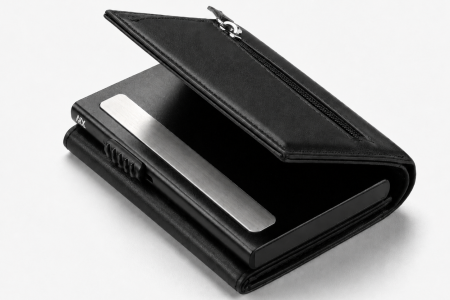
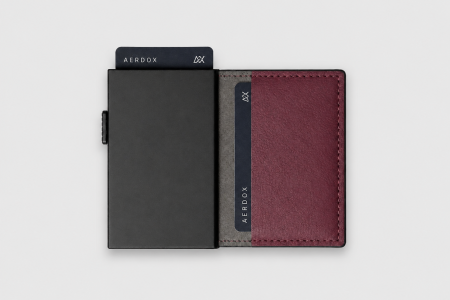
The Aerdox Astra Bi-Fold Cardholder wraps a quick-access aluminium chamber in a compact bi-fold form. Its side slider presents cards in a tiered stack, and the chamber is described as RFID blocking. It will naturally occupy more space than a flat cardholder, but can suit people who want a folded design without moving to a full wallet.
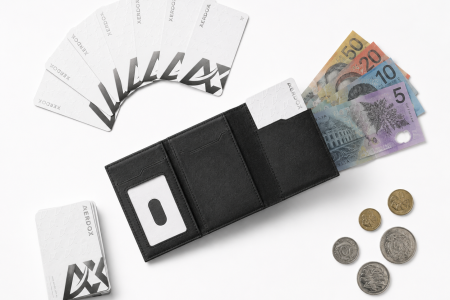
For a deeper format comparison, see bi-fold vs tri-fold wallets. A tri-fold is usually chosen for organisation and capacity rather than minimum front-pocket size.
Phone-attached carry for light days
A phone wallet can reduce the number of separate objects in your pockets. It is best treated as a light-day setup for a few essential cards, not an answer for every routine. Keeping phone and cards together may be convenient, but it also concentrates important items in one place. Some people prefer that simplicity; others prefer a separate backup.
The Aerdox AeroSnap is designed for phone-first card carry. Check your phone and case compatibility on the current product page. If you need notes, many cards or a displayed ID, choose a separate wallet format.
Materials, hardware and pressure points
A rigid aluminium card chamber can keep cards aligned and create a consistent shape. A leather or leather-style exterior can add grip and a softer surface. Mechanical triggers and carabiners are useful only when they do not sit at an uncomfortable point in your normal carry position. Look at the entire closed profile rather than a single material claim.
Clothing matters too. A wallet may sit vertically in one pocket and diagonally in another. Test it with the trousers you wear for commuting, work and weekends. Do not assume a measurement that works in a coat will behave the same way in fitted jeans.
How to test front-pocket comfort at home
- Build your real seven-day card stack and remove expired items.
- Place the stack in your current wallet and note the total shape.
- Try the front pocket while standing, walking, sitting and climbing stairs.
- Notice whether the pressure comes from overall size, one corner or uneven contents.
- Measure a wallet that fits well and compare the new product’s published dimensions where available.
- Repeat the test in at least two common pairs of trousers.
Do not use a phone or loose card stack as a permanent pocket substitute during the test. The aim is to understand the space and pressure points, then choose a design that secures the contents appropriately.
Common front-pocket mistakes
- Buying for maximum capacity: unused capacity often becomes future clutter.
- Keeping coins in a card-focused wallet: loose hard items create uneven pressure and can scratch surfaces.
- Folding receipts repeatedly: paper builds a soft but significant bulge.
- Ignoring the pocket opening: a wallet may fit inside but be awkward to remove.
- Overlooking access: a tiny wallet that makes every payment slow is not a comfortable everyday tool.
Our card organisation guide provides a practical clean-out routine. Once the contents are controlled, choosing the physical format becomes much easier.
Editorial note: Product specifications, availability and compatibility can change. Confirm the current details on the linked Aerdox product page before purchase.
Frequently asked questions
Is a front-pocket wallet safer?
It can be easier to notice in a front pocket, but no position eliminates theft or loss. Stay aware in crowds and use normal card security practices.
Should a front-pocket wallet be vertical or horizontal?
Either can work. The better orientation depends on pocket depth, opening width and how the closed wallet distributes pressure.
How many cards are comfortable in a front pocket?
There is no universal number. Carry the cards you genuinely use, stay within the product’s stated capacity and judge the wallet at its loaded thickness.
Can I carry a bi-fold wallet in my front pocket?
Yes, if its closed dimensions and loaded profile suit your clothing. A compact bi-fold cardholder will usually be easier than a high-capacity wallet.
What should I remove first to reduce wallet bulk?
Remove expired cards, old receipts, duplicate membership cards and items available securely in a digital format. Do not remove required identification or a sensible payment backup.
 by
by